A UDCPR special building is not defined by height alone. Any building for educational, assembly, mercantile, institutional, industrial, storage or hazardous use with 500 sq.m. or more on any floor is a special building irrespective of height. That classification, not the storey count, is what pulls fire doors into the design.
This matters more than it used to. Municipal corporations across Maharashtra have raised the height at which a fire NOC is demanded, and owners have read that as a blanket exemption. It is not one. The Unified Development Control and Promotion Regulations keep their construction duties exactly where they were.
The short version
Height is only the first of three limbs in the definition. The second limb catches a single-storey factory shed with a 600 sq.m. floor plate.
Special building status brings a two-staircase rule, and a fire stop door of 1 hour rating wherever a staircase runs around a lift shaft.
What UDCPR-2020 actually says
The sanctioned regulations define the term in three limbs. Quoted from the definitions chapter:
"Special Building means-
- i) any multi-storeyed building which is more than 24 m. in height measured from ground level, or
- ii) buildings for educational, assembly, mercantile, institutional, industrial, storage and hazardous occupancies having built-up area 500 sq.m. or more on any floor irrespective of height of such building, or
- iii) any building with mixed occupancies with any of the aforesaid occupancies in (ii) above with built-up area 500 sq.m. or more on any floor irrespective of height of such building."
Read limb (ii) slowly. There is no storey count in it. There is no height in it. There is an occupancy list and a floor-plate threshold, and the phrase "irrespective of height" is in the regulation's own words, not a commentator's gloss.
Who limb (ii) catches
Work through the occupancy list against ordinary buildings and the reach becomes obvious:
- Industrial — a single-storey shed with a 600 sq.m. floor plate. Very common on any MIDC plot.
- Storage — a godown or distribution warehouse, which is almost always well over 500 sq.m.
- Educational — a school or college block, including a two-storey one nowhere near 24 m.
- Institutional — a hospital wing or a nursing home floor.
- Mercantile — a showroom, supermarket or retail floor.
- Assembly — a hall, auditorium, banquet space or place of worship.
A four-storey residential building is not on that list and is not caught by limb (ii). A two-storey school with 520 sq.m. on the ground floor is caught. Height is doing none of the work.
The exemption that is not an exemption
The confusion is sharpest in Chhatrapati Sambhajinagar, where the municipal corporation was reported to have stopped requiring a fire NOC for buildings up to 24 m under UDCPR, against an earlier threshold of 15 m. Similar revisions have been reported for other municipal areas.
Treat that as a change to who has to go and ask for a certificate, not a change to what the building has to be. Two distinct things are in play:
- The approval process — whether you must obtain a fire NOC from the fire department before occupancy.
- The construction standard — what the building must physically contain, set by UDCPR, the National Building Code and the Maharashtra Fire Prevention and Life Safety Measures Act, 2006.
Relaxing the first does not touch the second. A building can be outside the NOC net and still be a special building carrying every staircase and door duty that status brings. We cover the local picture in more depth on our fire doors in Chhatrapati Sambhajinagar page.
There is also a second, independent route into the fire regime that has nothing to do with height or floor area: what you store or manufacture. Flammable, combustible or hazardous goods trigger requirements on their own terms.
What special building status actually requires
UDCPR attaches concrete construction duties to the classification. Regulation 9.28.7 is the one that reaches doors directly.
Two staircases, one a fire escape
The regulation requires that special buildings "shall have two staircases out of which one shall be fire escape staircase. They shall be of enclosed type." At least one must sit on an external wall and open directly to the exterior, an interior open space or an open place of safety. The provision of alternative staircases is then subject to travel distance being complied with.
"Enclosed type" is the phrase that matters. An enclosed staircase is a compartment, and a compartment is only as good as the openings in it.
A fire stop door of 1 hour rating at the lift shaft
The same regulation states that a staircase shall not be provided around a lift shaft "unless provided with fire stop door of 1 hour rating at every floor level and no other openings in the inside wall".
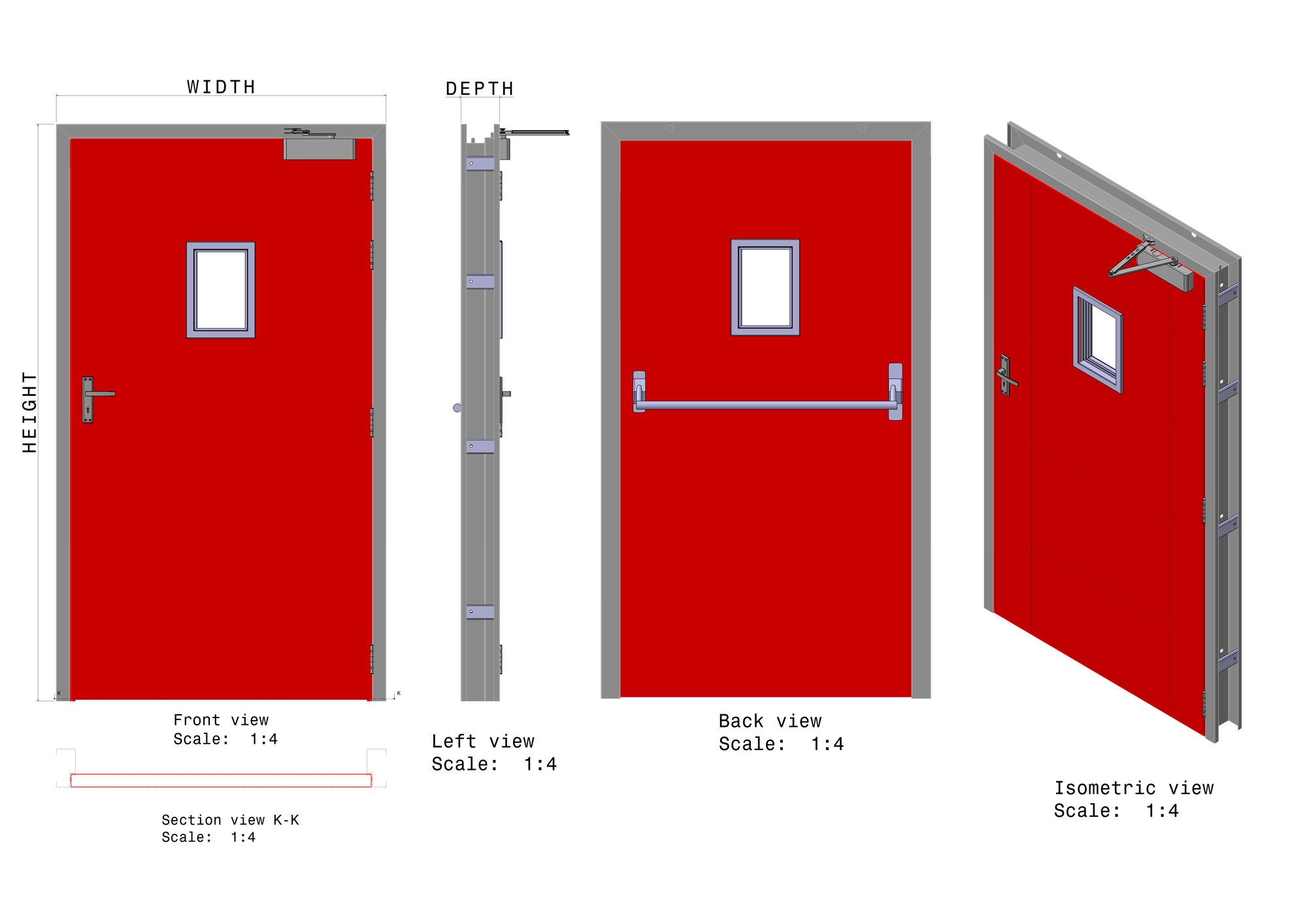
One hour is sixty minutes, so a fire stop door of 1 hour rating is an FD60 doorset. Note the words "at every floor level" — this is not one door at the entrance to the stair, it is a door on each floor the shaft passes. On a four-storey building that is four certified doorsets, specified as doorsets rather than bought as leaves.
Fire towers need fire resisting doors
UDCPR separately defines a Fire Tower as "an enclosed staircase which can only be approached from the various floors through landings or lobbies separated from both, the floor areas and the staircase by fire resisting doors and open to the outer air". Where a fire tower is used, the doors are part of the definition, not an accessory to it.
For the ratings that apply elsewhere in a building, NBC 2016 Part 4 remains the reference — its table puts fire enclosures of exits and fire separation assemblies at 120 min. Our guide to NBC 2016 fire door requirements works through how that table is applied.
Maintenance is an offence provision, not advice
UDCPR carries a penalty clause worth reading closely. It states that any person who neglects obligations imposed on him "including the maintenance of fire protection services, appliances and lifts in working order" is guilty of an offence as specified in Section 36 of the Maharashtra Fire Prevention and Life Safety Measures Act, 2006, and on conviction is subject to the penalties in that Act.
A fire door is part of those fire protection services. A door with its closer unscrewed because it slammed, or wedged open for trolley traffic, is not being maintained in working order. The point is covered in detail in our guide to why self-closing is not optional.
Separately, Section 3(3) of the Act requires the owner or occupier to furnish a maintenance certificate in the prescribed form twice a year, in January and July, confirming that the measures remain in good repair and efficient condition.
How to classify your own building
This takes ten minutes with the approved drawing in front of you:
- Find the occupancy. Educational, assembly, mercantile, institutional, industrial, storage or hazardous? If yes, limb (ii) is live and height is irrelevant.
- Find the largest floor plate. Built-up area on any single floor, not the total across floors. 500 sq.m. or more on any one floor is the trigger.
- Check mixed use. Limb (iii) applies the same test to a building that only partly contains one of those occupancies.
- Then check height. Over 24 m makes it special regardless of the above.
- Check what is stored. Flammable or hazardous materials bring their own requirements irrespective of the rest.
- Confirm it. Classification is the authority's call, not the owner's. Put it to the fire department or a Maharashtra licensed agency in writing.
Getting this right at drawing stage costs nothing. Getting it wrong surfaces at inspection or, worse, at a later audit, when the openings are built and a certified doorset has to be retrofitted into a frame that was never sized for one.
Frequently asked questions
Does a building under 24 m need fire doors in Maharashtra?
It can. UDCPR-2020 classifies a building as special if any floor has 500 sq.m. or more of built-up area in educational, assembly, mercantile, institutional, industrial, storage or hazardous occupancy, irrespective of height. Special buildings carry the staircase and fire door duties in Regulation 9.28.7. Confirm your classification with the fire department.
What rating is a fire stop door of 1 hour rating?
Sixty minutes, so an FD60 doorset. UDCPR Regulation 9.28.7 requires one at every floor level where a staircase is provided around a lift shaft, with no other openings in the inside wall. It is specified as a complete doorset, because the rating belongs to the assembly rather than the leaf.
If my corporation dropped the fire NOC below 24 m, am I exempt from fire doors?
No. A change to the NOC threshold changes whether you must obtain a certificate before occupancy. It does not change the construction requirements that UDCPR, the National Building Code and the Maharashtra Fire Prevention and Life Safety Measures Act, 2006 place on the building. Those are separate obligations.
Is a residential building ever a special building?
Under limb (i), yes, if it is more than 24 m in height. Residential occupancy is not in the limb (ii) list, so a low-rise residential building is not made special by floor area alone. A mixed-use building containing a listed occupancy is caught by limb (iii).
Does the 500 sq.m. mean total built-up area or per floor?
Per floor. The regulation says built-up area "500 sq.m. or more on any floor". A building with four floors of 200 sq.m. each totals 800 sq.m. but has no single floor at the threshold; a single floor of 520 sq.m. does.
Who decides whether my building is a special building?
The planning authority and the Chief Fire Officer, not the owner or the contractor. UDCPR defines the Chief Fire Officer by reference to the Maharashtra Fire Prevention and Life Safety Measures Act, 2006. Get the classification confirmed in writing before you finalise a door schedule.
Sources: the sanctioned Unified Development Control and Promotion Regulations for Maharashtra (UDCPR-2020), the Maharashtra Fire Prevention and Life Safety Measures Act, 2006, and the National Building Code of India 2016 Part 4, published by BIS. Municipal practice on fire NOC thresholds is based on press reporting and changes; confirm it with your local fire department.
Valtrix manufactures IS 3614:2021 certified fire doorsets from FD30 to FD180 at Dhakambe, Dindori, Nashik, and supplies projects across Maharashtra. See the full doorset range, the industries we supply, or our Chhatrapati Sambhajinagar page.

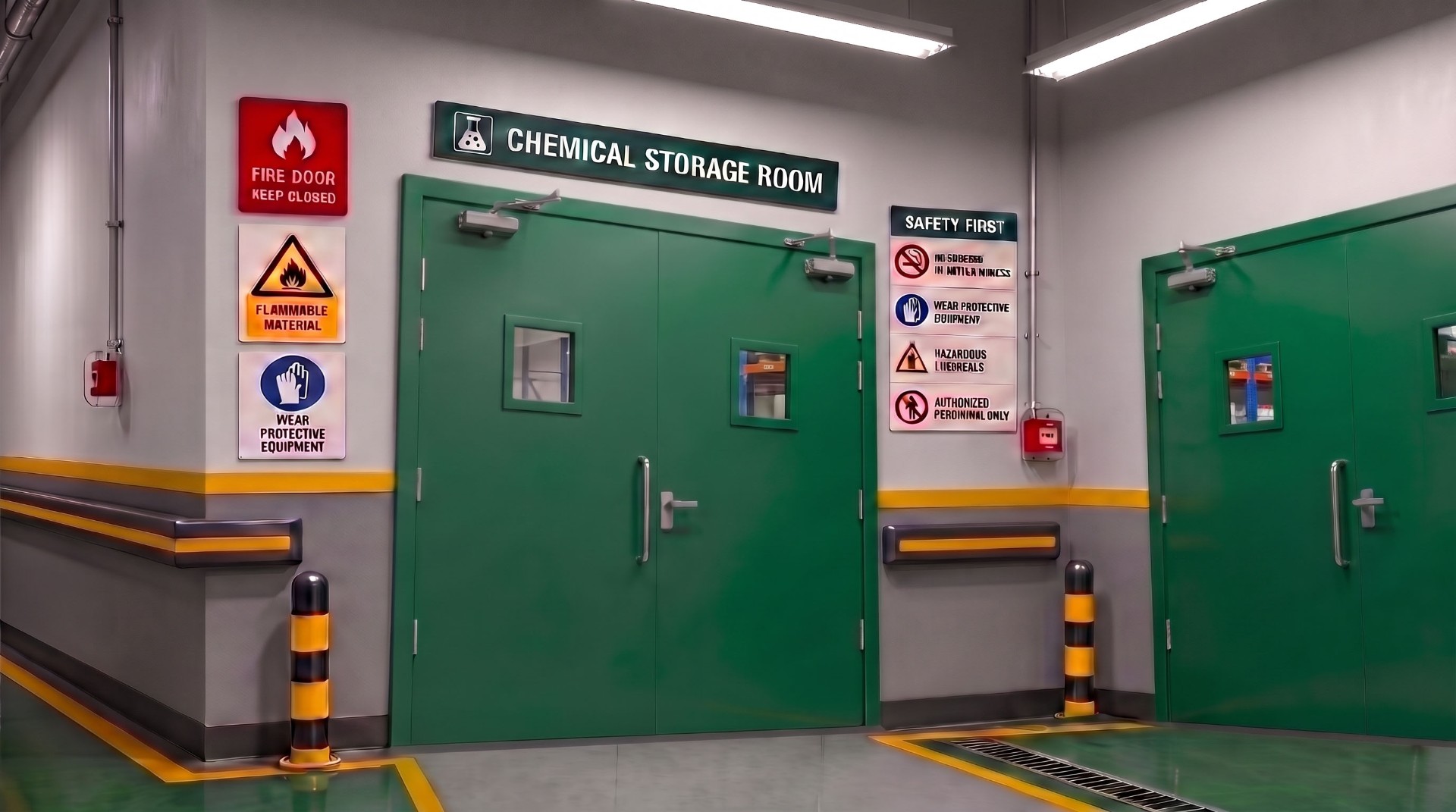 Fully InsulatedView Details →
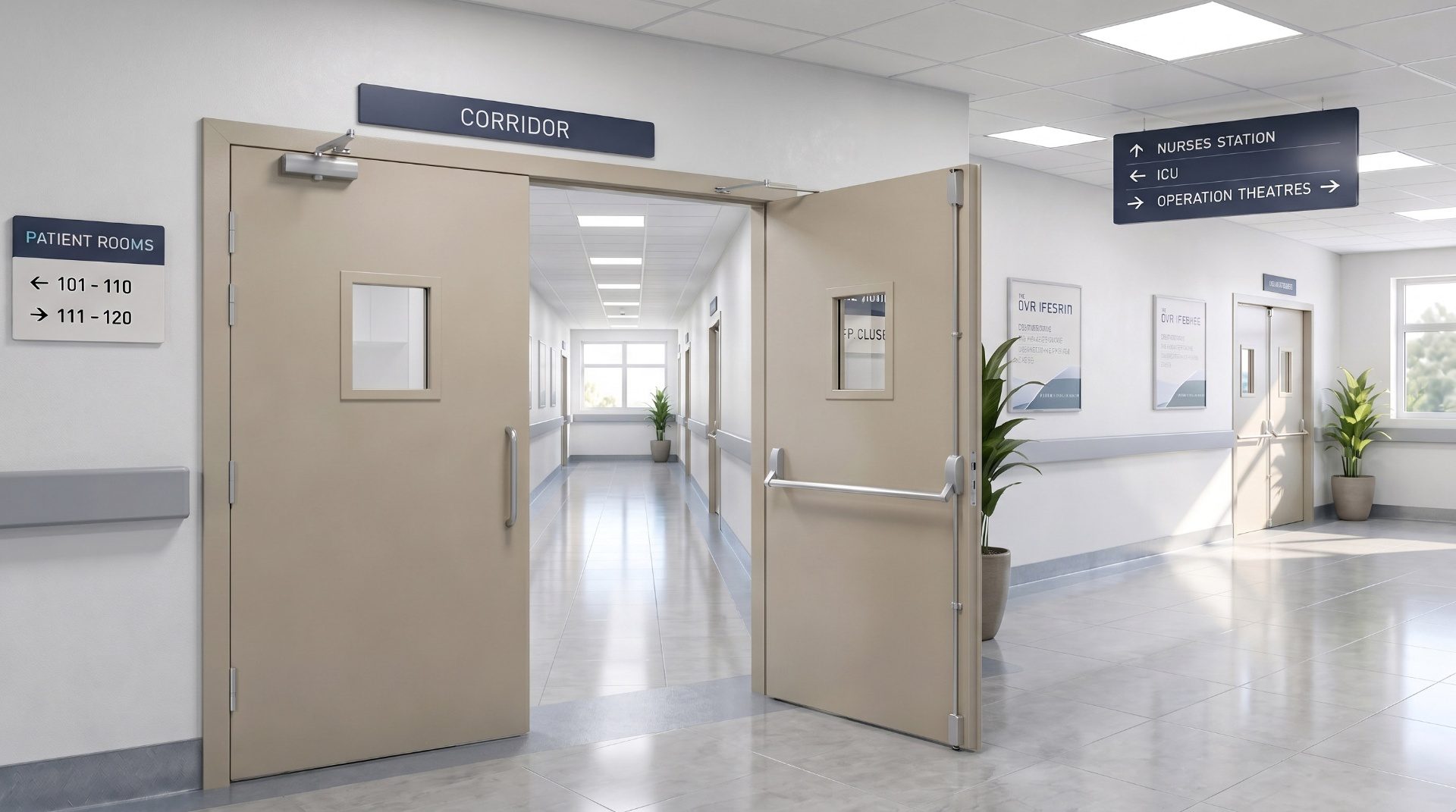 Partially InsulatedView Details →
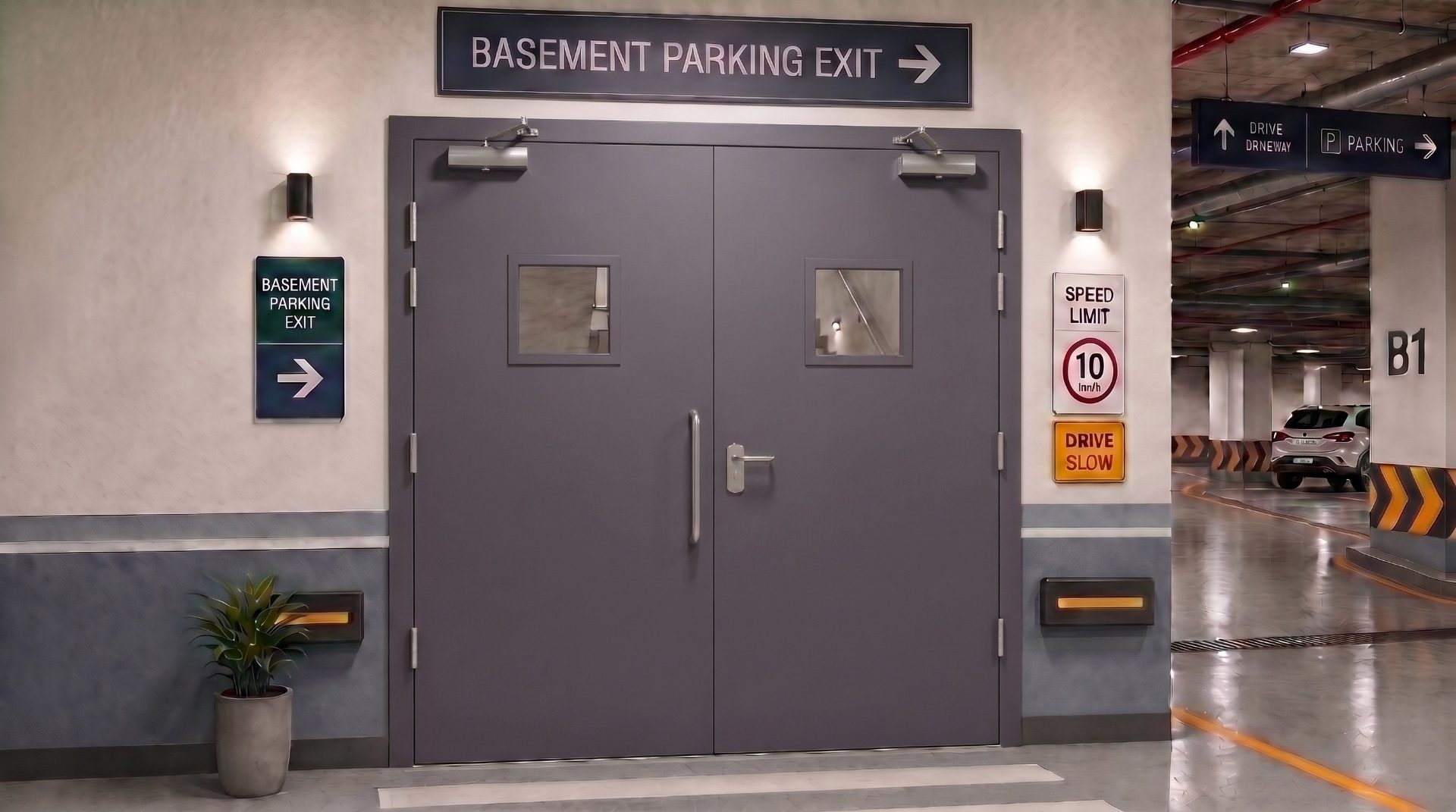 UninsulatedView Details →
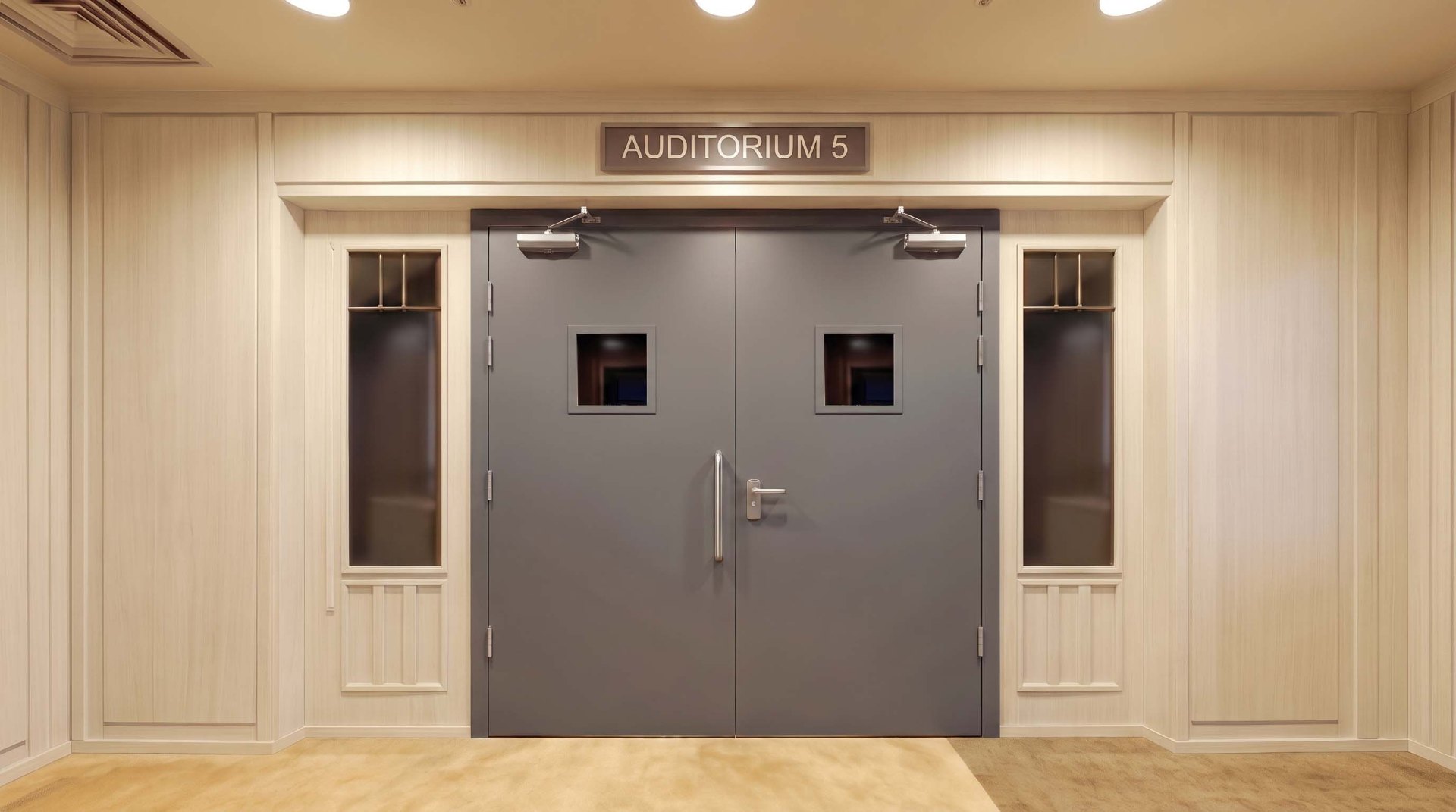 AcousticView Details →