
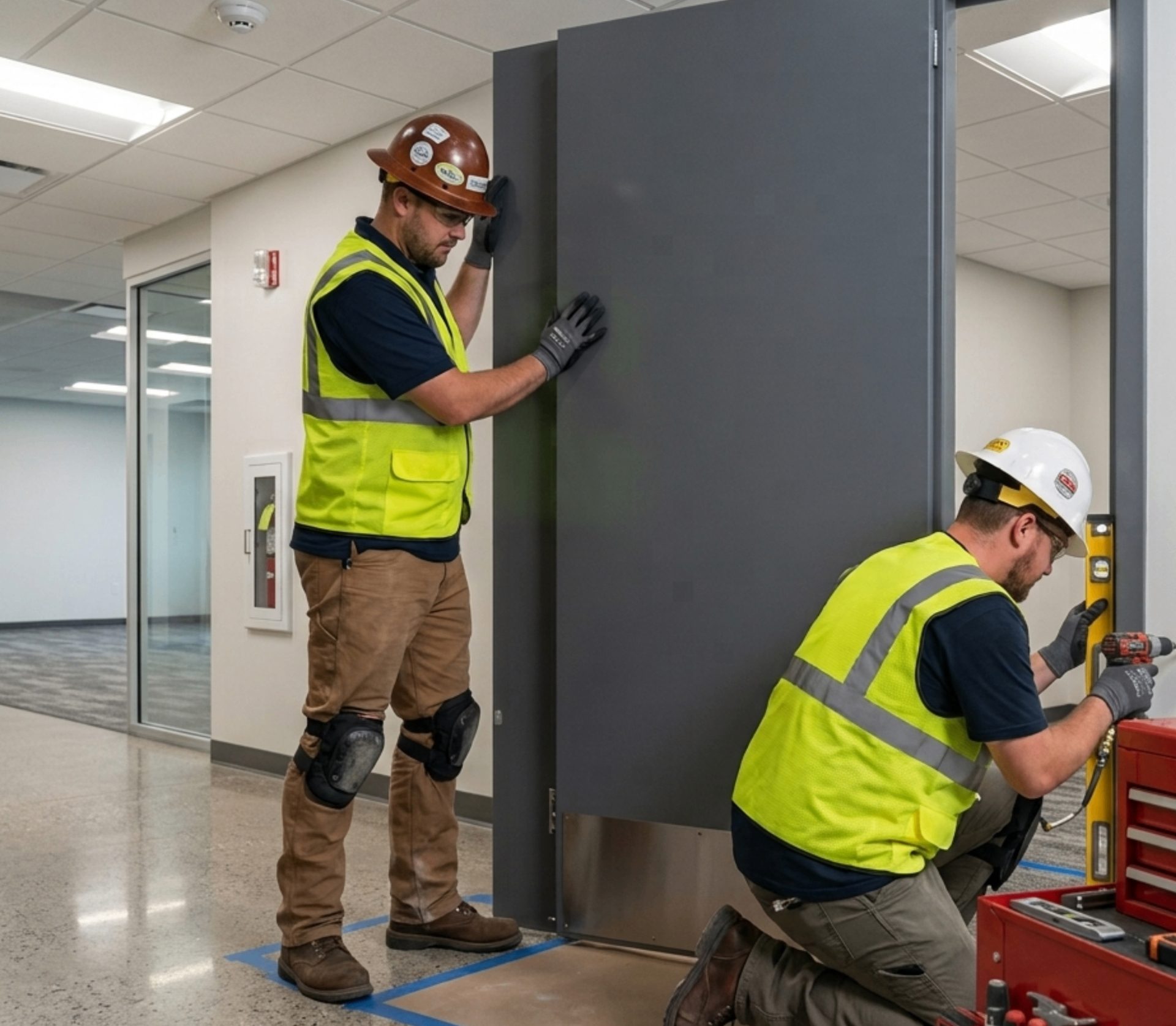
A fire door closer is the device that returns a fire door to its latched position after every use. IS 3614:2021 does not treat it as an accessory. Clause 7.2.9 states that all fire doors once installed shall be self-closing. A door standing open on a failed or removed closer is not a slower fire door. It is an open hole in a fire barrier.
What follows is what the standard asks of the closer itself: its certification label, how the device is sized, which hold-open arrangements are permitted, and the coordinator a double-leaf doorset needs.
At a glance
IS 3614:2021 clause 7.2.9 requires that all fire doors once installed shall be self-closing, and that all hold open devices shall be electrified and should be actuated by active fire and smoke detector.
The same clause bars mechanical hold-open units on fire rated doors, and requires a visible label of certification on the door closer body, expressly not on its covers.
IS 3564 sizes closers for doors up to 80 kg and 1000 mm wide. A leaf beyond that scope is sized from the doorset manufacturer tested hardware schedule instead.
What IS 3614:2021 asks of the closer
Clause 3.22 defines a door closer as a mechanical hydraulic device that closes an open door by mechanical force, with adjustable speed. Three obligations in clause 7.2.9 matter more.
Self-closing is a condition of installation
The obligation attaches at installation, not at supply, so a doorset delivered complete can still fail an inspection six months later.
The closer carries its own certification
Closers, concealed and surface mounted, sit in the clause 7.2.9 hardware list, which shall be type tested and certified for use on fire doors for the specified rating, and shall have labels, without which the fire door shall not carry any label of certification.
The label sits on the body, not the cover
Item c) is specific: a visible label of certification on the door closer body, and it states this does not include covers. A closer marked only on its snap-on cover stops being evidence the moment two screws come out.
The wider hardware schedule, including hinges, locks, panic devices and the fittings the standard does not permit, is in our guide to fire door hardware requirements under IS 3614:2021.
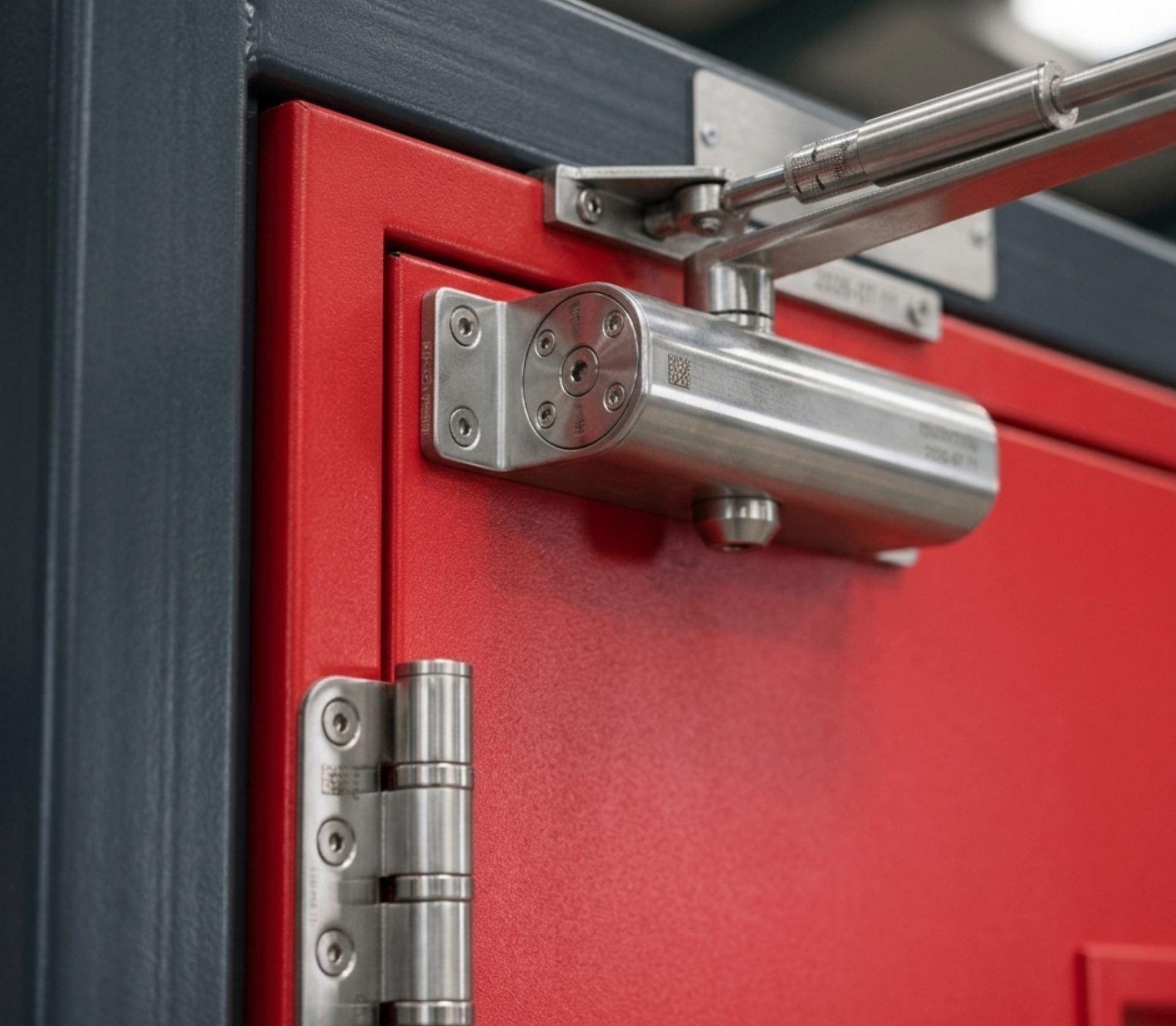
Power size: the number most specifications leave out
Most Indian specifications name a rating and a leaf size, then say door closer, one number, without a size. That leaves the decision that determines whether the door latches to whoever is holding the drill.
What IS 3564 covers, and where its scope stops
IS 3564 covers exposed type hydraulically regulated door closers for vertical hinge type doors opening to one side only, for doors not weighing more than 80 kg, in three sizes by door mass and width.
Note that IS 3564 says nothing about fire doors at all. It is a product standard for the mechanism, not a substitute for the fire certification the doorset standard demands. Annex A of IS 3614:2021 references IS 3564:1995 for exposed closers, IS 14912:2001 for concealed closers and IS 6315:1992 for floor springs. Catalogues now also list a 2025 revision of IS 3564 said to amalgamate IS 14912, so confirm which edition your supplier certificate cites.
The European sizing most catalogues quote
Imported closers and many Indian catalogues carry an EN power size from BS EN 1154 instead. That scale runs from EN 1 to EN 7, rising from roughly a 750 mm, 20 kg door to a 1600 mm, 160 kg door. Suppliers working to it treat EN 3 as the minimum for a fire door fitted with an automatic closer, and EN 1 and EN 2 as unsuitable. Where width and mass point to different sizes, the higher wins. On an adjustable closer, what matters is the setting it is left on at handover, not the range printed on the box.
Specifier's note
Annex B-10 of IS 3614:2021 gives the one acceptance test that needs no instrument. The closer must have enough spring power to latch the door, and spring hinges should be adjusted to achieve positive latching when allowed to close freely from an open position of 30 degrees.
Open the leaf 30 degrees, let go, and watch. If it stalls, creeps, or meets the frame without the latch engaging, the closer is under-sized or wrongly adjusted, whatever the label says.
Hold-open devices: one clause decides the detail
A door on a closer in a busy corridor gets propped. IS 3614:2021 answers that directly, and the answer is narrow.
Clause 7.2.9 requires that all hold open devices shall be electrified and should be actuated by active fire and smoke detector, and item c) states that mechanical hold-open units are not allowed on fire rated doors. Clause 3.23 defines the permitted device as a fail-safe device, controlled by a detection device, used on an automatic closing door. Fail-safe is the operative word: lose power, lose the hold, and the door closes. Item h) extends certification to the hold open devices, coordinators and stops themselves, and item g) adds that a holder or release device should where possible be mounted at the top of the door, close to the lock edge.
What the National Building Code adds
NBC 2016 Part 4 runs the same way. Clause 6.3.2 requires compartments to be divided with self-closing fire doors with electromagnetic hold open, allowing doors in fire resistant walls to be normally kept open provided they close automatically. Annex J-6.5(b) states that all fire doors shall be fitted with an automatic self-closing device, and J-6.5(c) adds that a fire door on an escape route shall not be held open by any means other than an electromagnetic or electro-mechanical device.
For exits it is firmer. The Note under clause 2.22 says fire doors in exits should not be allowed to be on hold open position, should be kept closed, and should close by a door closure spring mechanism. How this sits in the wider high-rise picture is covered in our guide to NBC 2016 fire door requirements.
Double-leaf doors need a coordinator
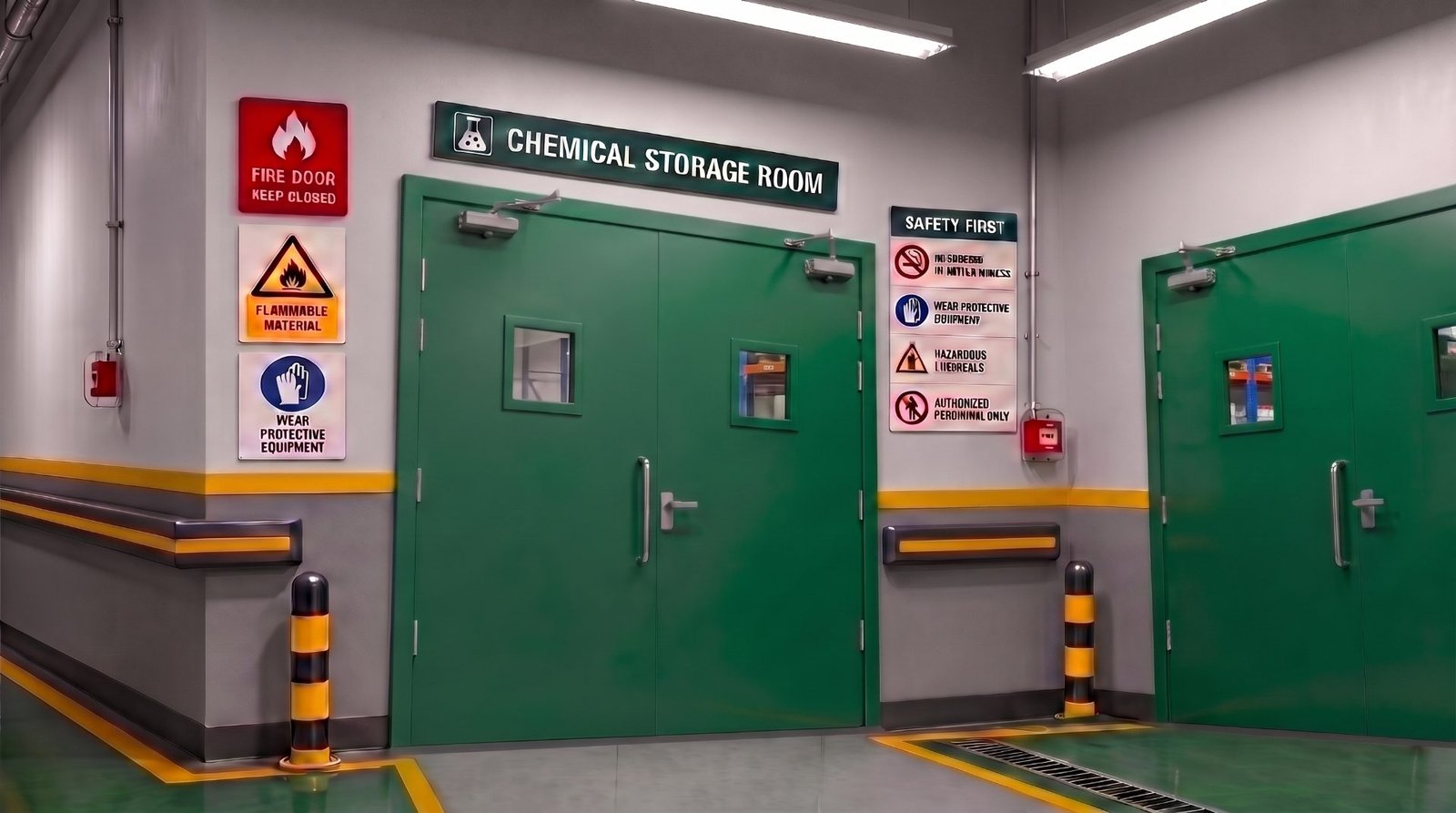
Two leaves released together can meet in the wrong order, leaving the inactive leaf outside the rebate with the active leaf resting against it. The barrier is then open along its centre line though both closers worked.
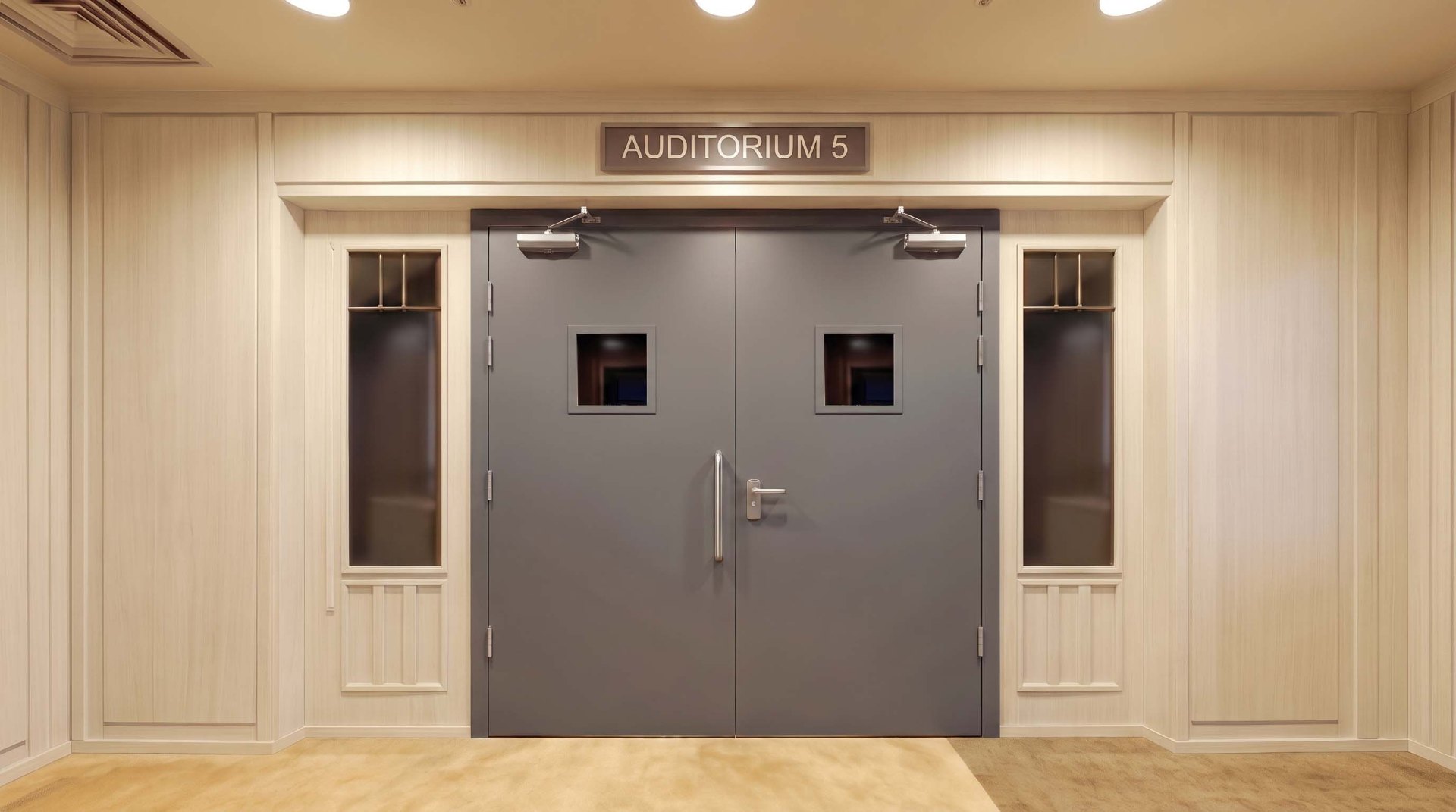
Clause 3.21 names the fix: a door coordinator is a device used on pairs of swinging doors that prevents the active leaf from closing before the inactive leaf closes. Clause 7.2.9 requires one on doors fitted with electromechanical, electrical or panic devices, demonstrating the sequence of closing, permits automatic flush bolts where a coordinator is used, and requires the coordinator itself to be certified.
Specify it at enquiry stage. Retrofitting one means drilling a certified frame head, the site modification that puts an assembly outside its evidence. Our comparison of double and single leaf fire doors covers when the second leaf is worth the hardware it brings.
The real failure is not the closer
On a working site the closer is rarely broken on arrival. It is disconnected, wound down to nothing, or defeated by a wooden wedge, because a self-closing door is inconvenient to anyone carrying a load.
Clause 9.6.1 anticipates the slower version. Fire doors are intended to provide a similar level of fire resistance as the fixed elements of a building, but since such doors are often opened and closed many times a day, this mobility is likely to cause a more rapid deterioration in fire resistance performance. It names two forms: damage to the leaf or the components making up the assembly, and wear and tear in the building hardware, or a reduction in the effectiveness of fixings, causing the door to fail to self-close, thereby resulting in a breach of the fire barrier. Annex B-14 names the parts that wear first, among them hinges, catches, closers and latches.
Maharashtra attaches a continuing statutory duty on top. Under the Maharashtra Fire Prevention and Life Safety Measures Act 2006, as amended in 2023, the owner, or the occupier where the owner cannot be traced, shall maintain the fire prevention and life safety measures in good repair and efficient condition at all times. Against that wording a wedged-open stair door is not a housekeeping lapse but a measure that is not in efficient condition.
The check takes a minute per door and belongs in the handover round as much as the annual one, alongside the wider fire door inspection checklist: release the leaf from 30 degrees, confirm it latches without a push, check the label is on the closer body, and look for the wedge.
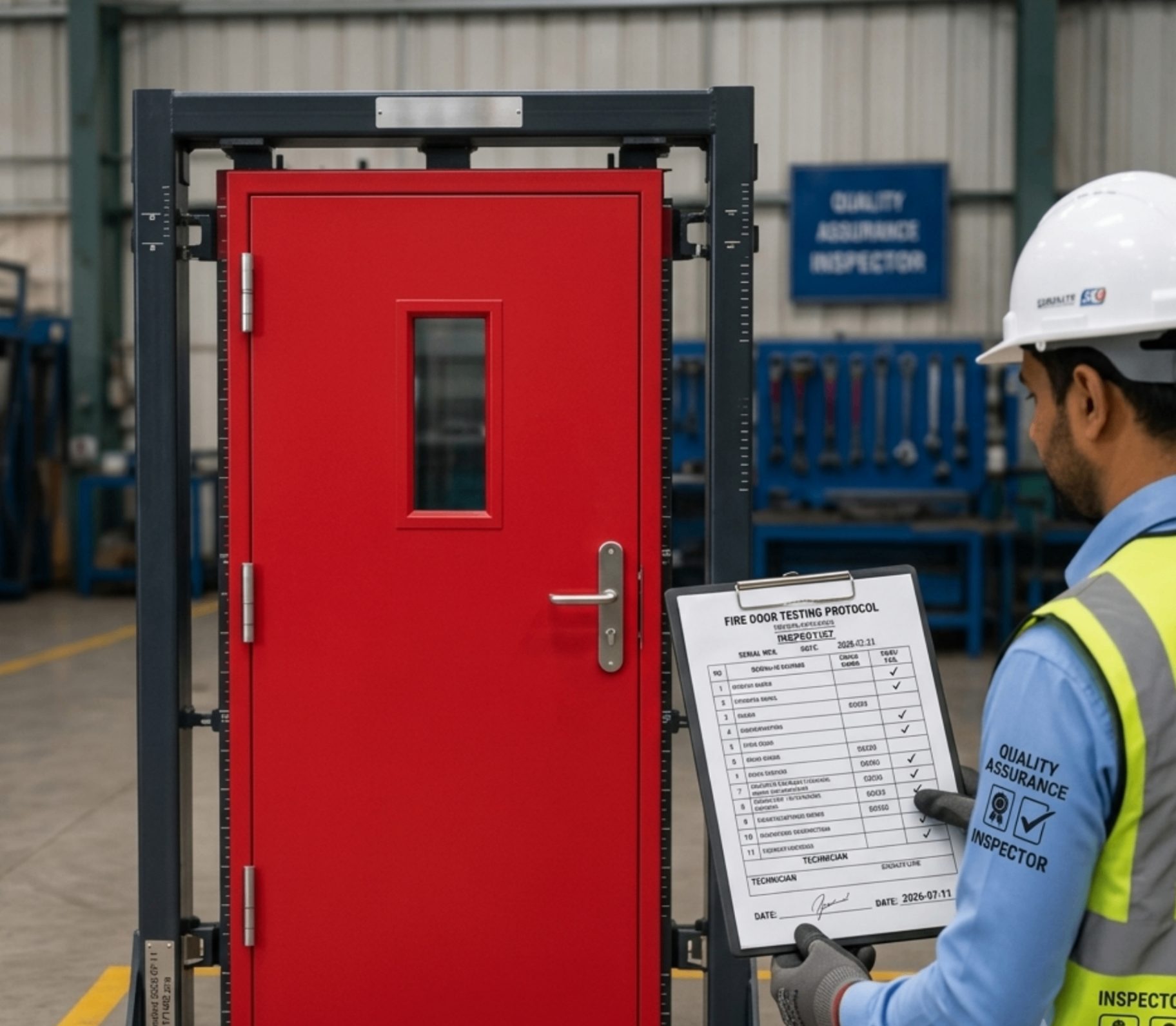
What to put in the closer line of a specification
Five lines turn an unquotable closer entry into one a manufacturer can check against its evidence:
- Rating of the doorset the closer serves, since certification is per rating.
- Mounting surface, concealed or floor spring, which decides whether IS 3564, IS 14912 or IS 6315 governs the mechanism.
- Size or power size as an IS 3564 size or an EN power size, with the setting required at handover if adjustable.
- Hold-open requirement yes or no, and if yes, electrified and actuated by detection, never mechanical.
- Coordinator on every pair, with the active leaf identified.
Frequently asked questions
Do all fire doors in India need a door closer?
Effectively, yes. IS 3614:2021 clause 7.2.9 requires that all fire doors once installed shall be self-closing, and NBC 2016 Part 4, Annex J-6.5(b), states that all fire doors shall be fitted with an automatic self-closing device. The closing force may come from a closer or from spring hinges, but no fire door may be left without a self-closing arrangement.
Can a fire door be held open legally?
Only by an electrified device that releases on detection. Clause 7.2.9 of IS 3614:2021 requires hold open devices to be electrified and actuated by active fire and smoke detector, and states that mechanical hold-open units are not allowed on fire rated doors. NBC 2016 Annex J-6.5(c) permits an electromagnetic or electro-mechanical device only, and the Note under clause 2.22 rules it out in exits entirely.
What size door closer does a fire door need?
IS 3564 sizes closers by door mass and width in three sizes, covering doors up to 80 kg and 1000 mm wide. Leaves beyond that scope are sized from the doorset manufacturer tested hardware schedule. Catalogues quoting BS EN 1154 power sizes treat EN 3 as the minimum for a fire door. Where width and mass indicate different sizes, choose the higher.
Is an ISI marked door closer acceptable on a fire door?
Not on its own. An ISI mark to IS 3564 certifies the mechanism as a door closer. IS 3614:2021 separately requires hardware to be type tested and certified for use on fire doors for the specified rating, with a visible label of certification on the closer body, not on its covers. Both are needed, and only the second is about fire.
Why does a double leaf fire door need a coordinator?
Because two leaves released together can close in the wrong order, leaving the active leaf outside the rebate and the barrier open along the centre line. Clause 3.21 of IS 3614:2021 defines the coordinator as the device that prevents the active leaf from closing before the inactive leaf, and clause 7.2.9 requires one on pairs fitted with electromechanical, electrical or panic devices, demonstrating the sequence of closing.
Can a door closer be adjusted to make a fire door easier to open?
Only within the range that still latches the door. Annex B-10 of IS 3614:2021 requires enough spring power to latch the door, tested by releasing the leaf freely from an open position of 30 degrees. Winding a closer down until the door is light to push is the most common way a compliant doorset is quietly made non-compliant after handover.
Sources: IS 3614:2021 Fire Doors and Doorsets and IS 3564 Hydraulically Regulated Door Closers, published by BIS; NBC 2016 Part 4; and the Maharashtra Fire Prevention and Life Safety Measures Act 2006 as amended in 2023.
Valtrix manufactures IS 3614:2021 certified fire doorsets from FD30 to FD180, fully insulated, partially insulated, uninsulated and acoustic, in single and double leaf, at Dhakambe, Dindori, Nashik. See the full doorset range or the industries we supply.

 Fully InsulatedView Details →
 Partially InsulatedView Details →
 UninsulatedView Details →
 AcousticView Details →