
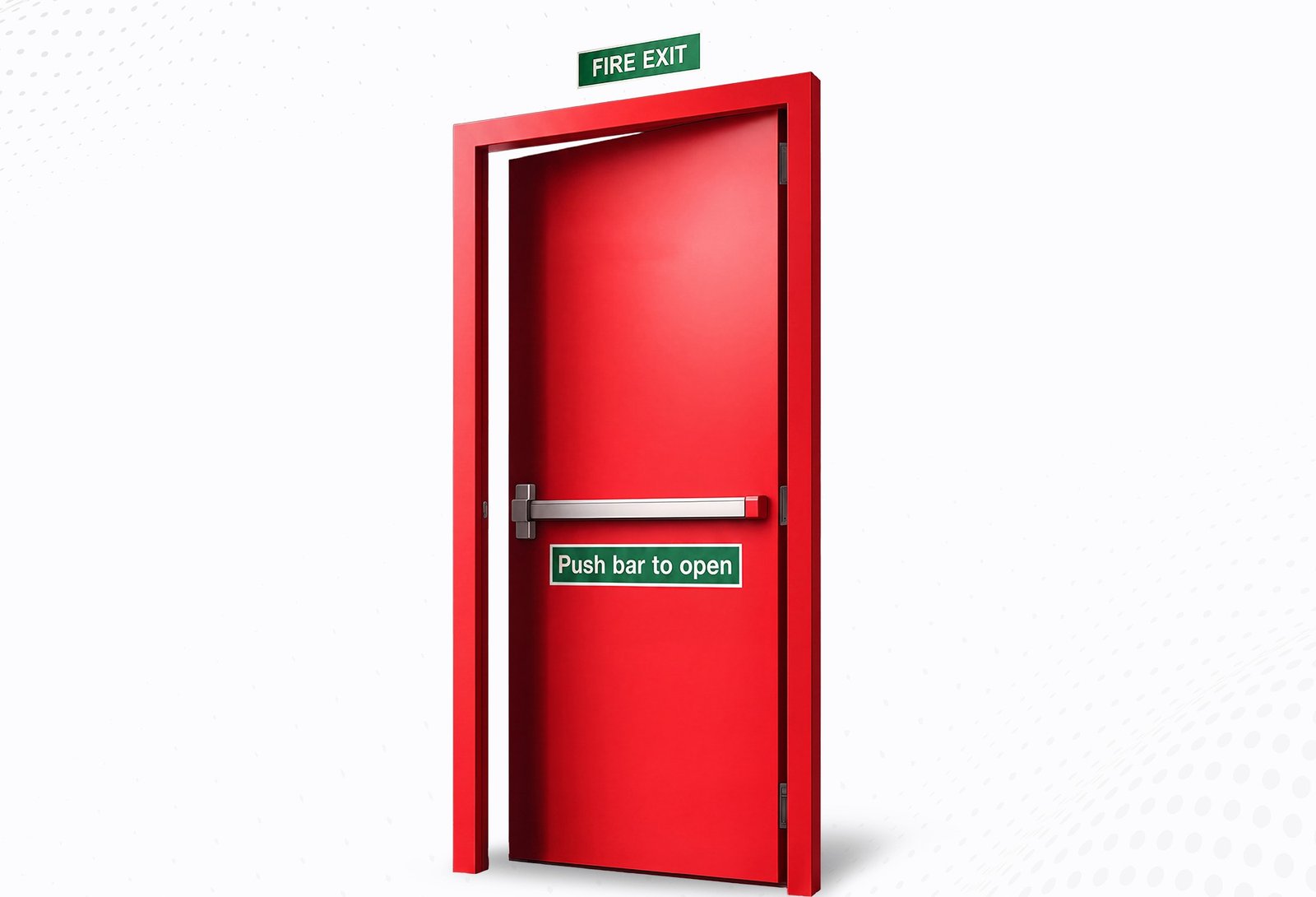
Introduction: Why Choosing the Right Fire Door Matters
A fire door is not just a regular door with additional protection; it is a critical life safety component designed to restrict the spread of fire, smoke, and heat within a building.
In industrial facilities, commercial buildings, hospitals, data centres, warehouses, and other high-risk areas, selecting the right fire door directly impacts occupant safety, asset protection, and regulatory compliance.
This guide explains the key factors to consider when selecting a fire door for your project.
Key Factors to Consider When Selecting a Fire Door
1. Identify the Required Fire Rating
The first and most important factor is determining the required fire resistance rating of the door.
Fire doors are classified based on the duration they can withstand fire exposure while maintaining their integrity. Common ratings include:
- FD60 – Provides fire protection for up to 60 minutes
- FD90 – Provides fire protection for up to 90 minutes
- FD120 – Provides fire protection for up to 120 minutes
How Fire Rating Impacts Selection: The required fire rating depends on factors such as building type and occupancy, fire risk level, installation location, applicable fire safety regulations, and fire compartmentation requirements.
For example, a fire door installed in an electrical room or high-risk industrial zone may require a higher fire rating compared to a standard office area. Selecting the correct fire rating ensures that the door performs effectively during a fire emergency.
2. Understand the Application Area
Every building has different fire safety requirements. The same fire door specification may not be suitable for every location.
Common applications include:
- Industrial manufacturing units
- Warehouses and logistics facilities
- Electrical and technical rooms
- Data centres
- Hospitals and healthcare facilities
- Commercial buildings
- Fire escape routes
How Application Affects Selection: Areas with higher fire risks require doors designed for enhanced protection, durability, and performance. Electrical rooms require doors capable of protecting against potential fire hazards caused by equipment failures; warehouses require durable fire doors designed to protect large storage areas; escape routes require reliable fire doors that help maintain safe evacuation paths.
3. Select the Right Door Core Material
The internal core plays a crucial role in determining the fire performance of a fire-rated door. Common fire-resistant core materials include Rockwool core, Ceramic wool core, and Honeycomb core.
How Core Material Impacts Performance: The core determines the door's ability to resist heat transfer and maintain structural stability during fire exposure. A high-quality fire-resistant core helps reduce heat transmission, maintain door integrity, delay fire spread, and improve overall fire resistance performance.
4. Verify Compliance and Certification Standards
Certification and testing are essential indicators of performance reliability. Important documents include fire test reports, compliance certificates, and quality verification documents.
5. Consider Door Material and Construction Quality
Important factors include sheet thickness, steel quality, welding quality, frame construction, and surface protection. A well-engineered steel fire door provides better structural strength, improved durability, resistance against daily wear and tear, and long-term reliability.
6. Select the Right Hardware Components
Important components include fire-rated hinges, mortise locks, panic bars, door closers, intumescent seals, and drop seals. All hardware must be compatible with the fire rating and tested door system.
7. Evaluate Customization Requirements
Customization options include single or double-leaf doors, vision panels, special dimensions, hardware configurations, and surface finishes.
8. Choose a Reliable Fire Door Manufacturer
A trusted fire door manufacturer should provide certified products, technical support, quality documentation, manufacturing expertise, installation guidance, and after-sales support.
Valtrix Fire Doors | Engineered for Critical Protection 🛡️
Consult our Expert at +91 89561 96974